25GBASE-LR: The Practical Middle Ground Between Legacy and Scale
Why 25GBASE-LR Exists in Real Networks
25GBASE-LR did not appear because networks suddenly demanded elegance or novelty. It appeared because many networks reached an uncomfortable stage where 10G was no longer enough, yet jumping straight to 100G felt premature, expensive, or operationally risky. In that gap, 25GBASE-LR became a practical answer rather than an ambitious one.
This optic was never meant to steal headlines. Its value lies in how quietly it fits into existing infrastructures while delivering a meaningful improvement in capacity. For operators managing gradual traffic growth, 25GBASE-LR often feels less like an upgrade and more like a correction.
The Reality of Incremental Bandwidth Growth
In theory, traffic growth curves look smooth and predictable. In reality, they are uneven. Some links stay flat for years. Others spike unexpectedly due to new services, user behavior, or architectural changes. 25GBASE-LR aligns well with this messy reality.
Instead of forcing a full redesign around 100G, teams can selectively upgrade long-reach links that are under pressure. This allows bandwidth increases to happen where they are actually needed, rather than everywhere at once. Over time, this incremental strategy reduces waste and avoids overprovisioning that never delivers real value.
Operational Familiarity as a Hidden Advantage
From an operational standpoint, 25GBASE-LR feels familiar in the best possible way. It uses single-mode fiber, standard duplex connections, and behaves like Ethernet optics that teams have already managed for years. Monitoring tools, alerting thresholds, and troubleshooting workflows do not need to be reinvented.
This familiarity matters, especially in smaller teams or distributed organizations where deep optical expertise may not be available around the clock. When something goes wrong, engineers can rely on intuition and experience rather than documentation and vendor support tickets.
Why 25G Makes More Sense Than 40G in Many Cases
It is worth noting that 25GBASE-LR often replaces 40G rather than complements it. While 40G had its moment, 25G integrates more cleanly into modern switch architectures. Lane efficiency, port density, and upgrade paths all favor 25G in contemporary designs.
In many networks, deploying 25GBASE-LR simplifies planning. Four 25G links scale naturally into 100G without awkward transitions. This modularity makes long-term evolution easier and reduces the chance of stranded capacity.
Economic Considerations Beyond Module Pricing
The cost conversation around optics is often overly simplistic. It focuses on module prices rather than system-level impact. 25GBASE-LR tends to perform well when evaluated holistically.
By extending existing fiber plant and delaying the need for higher-speed aggregation, it can reduce capital spending in the short and medium term. At the same time, its predictable power consumption and thermal behavior simplify capacity planning in access and aggregation layers.
For many organizations, these indirect savings outweigh small differences in per-module cost.
Where 25GBASE-LR Fits Best
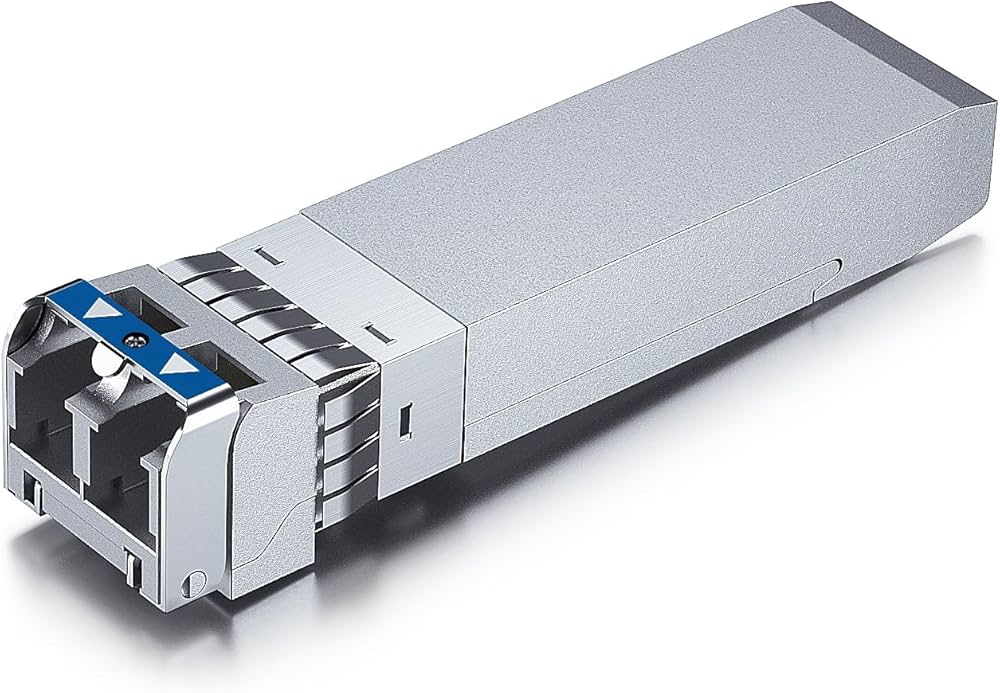
25GBASE-LR transceiver excels in scenarios where reach matters, but traffic growth is steady rather than explosive. Campus interconnects, regional facilities, access-to-aggregation links, and enterprise data center extensions are common examples.
These links often carry important traffic, but not at volumes that justify complex optical transport systems. In such cases, 25GBASE-LR delivers a balanced mix of reach, simplicity, and capacity.
Limitations That Should Be Acknowledged
It is important to be realistic about what 25GBASE-LR cannot do. It is not designed for ultra-long distances or dense wavelength multiplexing. Networks expecting rapid jumps to 400G or beyond will eventually move past it.
However, acknowledging these limits does not diminish its value. Instead, it helps position 25GBASE-LR as a deliberate choice rather than a compromise.
25GBASE-LR as a Transitional Technology Done Right
Not all transitional technologies age well. Some feel awkward and short-lived. 25GBASE-LR is different because it aligns cleanly with how networks actually evolve. It offers enough headroom to remain relevant for years, while fitting neatly into broader Ethernet roadmaps.
For many operators, it becomes part of a layered strategy: deploy 25G where it makes sense, observe traffic patterns, and upgrade selectively when the business case is clear.
Conclusion
25GBASE-LR is not about chasing maximum performance. It is about making sensible decisions in networks that grow unevenly and operate under real constraints. By bridging the gap between 10G and 100G with minimal disruption, it enables smoother evolution, better cost control, and operational confidence. In that role, it earns its place as one of the most practical long-reach Ethernet options available today.
Keep an eye for more latest news & updates on LookWhatMomFound!