
For decades, the image of a classroom 3D printer was a small, buzzy machine churning out gray or white plastic trinkets. While these early tools successfully introduced students to the concept of additive manufacturing, they often stopped short of being true pedagogical instruments. In the educational landscape of 2026, we have realized that a “monochrome” approach to engineering and science is not just an aesthetic limitation—it is a cognitive one.
As STEM (Science, Technology, Engineering, and Mathematics) curricula become increasingly complex, the shift toward the color 3d printer is proving to be a game-changer for student comprehension and engagement.
The Cognitive Load of Complexity
In engineering education, “spatial reasoning” is the ability to mentally manipulate 2D and 3D objects. It is a foundational skill, yet many students struggle to visualize how internal components of a machine interact. When a student prints a complex gearbox in a single color, the “noise” of the uniform material makes it difficult to distinguish between the drive gear, the idler, and the housing.
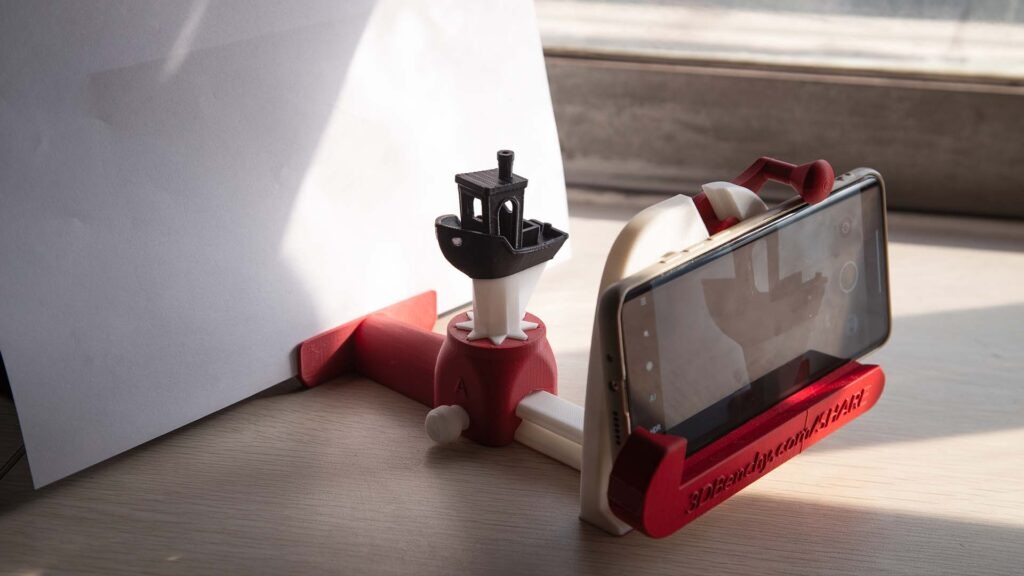
By utilizing a high-performance 3d printer capable of multi-material output, educators can now assign specific colors to specific functions. Imagine a student assembling a centrifugal pump where the impeller is bright orange, the seals are flexible black TPU, and the casing is translucent clear. This “color-coded assembly” drastically reduces cognitive load. Students no longer have to guess which part performs which function; the visual data is embedded directly into the physical object.
Moving Beyond “Look and Feel” to “System Logic”
The 2026 classroom is moving away from “part-making” and toward “system-thinking.” In high school and university robotics programs, the color 3d printer allows for the creation of “Smart Prototypes.”
For example, a student designing a robotic arm can print the structural “bones” in a high-strength white filament, while marking “keep-out zones” or wiring paths in high-visibility red. This teaches the student to think like a professional industrial designer, where safety, maintenance, and cable management are as important as the primary function.
Furthermore, the ability to print in multiple materials allows for “Functional Color.” Students can now print rigid components with integrated “living hinges” or “soft-touch” grips in a single build. This level of sophistication helps students understand the relationship between material properties and mechanical engineering—a core concept that is often lost in theoretical textbooks.
Closing the “A” in STEAM
There has been a significant push to transition STEM to STEAM (Science, Technology, Engineering, Arts, and Mathematics). In 2026, the 3d printer is the primary bridge for this transition. When students can experiment with gradients, textures, and color blending, they engage the creative side of their brain alongside the analytical.
In architecture classes, students are using these tools to represent different urban environments. A multi-color model can represent “green space” in moss-green, “water features” in semi-transparent blue, and “residential zones” in a clean matte gray. This level of realism allows students to present their ideas with a professional polish that inspires confidence and helps them win design competitions and scholarships.
The 2026 Classroom Standard: Safety and Simplicity
Implementing 3D printing in a school environment used to be a maintenance nightmare for teachers. In 2026, the technology has matured to prioritize “uptime” and user safety. Modern educational units feature fully enclosed chambers, HEPA air filtration to manage VOCs (Volatile Organic Compounds), and “tangle-detection” sensors that pause the print if the filament jams.
More importantly, the software has become intuitive. Students can now “paint” their 3D models in a digital environment, and the slicer automatically manages the complex filament swaps. This allows the teacher to focus on the lesson (the physics of the gearbox) rather than the tool (how to fix a clogged nozzle).
Building the Workforce of Tomorrow
The ultimate goal of STEM education is to prepare students for the modern workforce. In 2026, industries ranging from aerospace to consumer electronics are using multi-material additive manufacturing for production. By giving students access to a color 3d printer early in their development, schools are ensuring that their graduates are “tool-ready” for the high-tech careers of the future.
They are learning how to manage multi-part assemblies, how to design for different material tolerances, and how to use color as a functional language. These are the skills that will define the engineers of the 2030s.
Conclusion: A Vibrant Future for Education
Monochrome learning is a relic of the past. As we look at the classrooms of 2026, the presence of a high-capability 3d printer is no longer a luxury—it is a necessity for any institution serious about technical literacy. By bringing color and multi-material functionality into the hands of students, we are not just making models; we are building a more intuitive, creative, and capable generation of problem-solvers.
Stay in touch to get more updates & news on The Lookwhatmomfound!