What Is Greywater Reuse and Is It Safe at Home
Greywater reuse means taking wastewater from your shower, bath, or washing machine and using it again for outdoor watering. When a household uses water for cleaning or bathing, that greywater typically goes straight down the drain.
Without any system to capture it, thousands of litres of usable water get wasted yearly that could keep your garden alive instead.
Let’s be real here: most homes flush perfectly good water into the sewer when it could water plants or lawns with minimal treatment. This waste adds up fast, especially during dry spells when every drop counts.
This article from Eco 4 The World explains what greywater actually is, where it comes from in your house, and how to reuse it safely. You’ll learn simple ways to start saving water today, plus how sustainable systems can cut your water bills while helping the environment.
Greywater Reuse Explained: What It Actually Means
Picture this: you finish a shower and watch perfectly usable water disappear down the drain forever. That’s greywater leaving your home, and it happens every single day across millions of households.

Put simply, greywater is any wastewater that comes from your bathroom, shower, bath, basin, or washing machine. It’s called “grey” because it sits between clean water and sewage. This water contains some soap, dirt, and body oils, but nothing as harmful as what goes down your toilet.
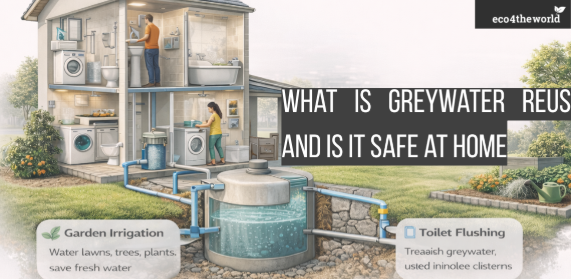
Greywater reuse means capturing this wastewater before it hits the sewer system and redirecting it to gardens, lawns, or even toilet flushing after basic filtering. The water isn’t clean enough to drink, but it’s perfectly fine for watering plants or sanitation purposes that don’t need drinking-quality water.
Where Does Greywater Come From in Your Home?
Most greywater in your home comes from bathrooms, laundry, and sometimes kitchen sinks during daily use. And here’s the thing: you’re probably producing way more greywater than you realise (it’s more common than you think).
Here’s where your household greywater actually originates:
- Bathroom showers and baths: Your shower produces the largest volume of greywater through daily wash routines. A typical shower uses around 60-80 litres of water that could flow straight to your garden instead of the sewer system.
- Bathroom sinks and basins: Handwashing, teeth brushing, and face washing all create greywater. These sinks generate smaller amounts, but the waste adds up across multiple household members.
- Washing machines: Your washing machine generates massive volumes of greywater, especially from the rinse cycle. A single wash produces 50-150 litres of water that’s perfect for outdoor irrigation systems.
- Kitchen sinks: Water from washing dishes creates greywater, but this wastewater is trickier to manage because food scraps and grease can build up in systems and harm plants.
The bathroom and washing machine are your biggest greywater sources, making them the best places to start any sustainable water management efforts at home.
Water You Can Reuse vs. Water You Can’t
The best part about knowing which water is safe is that you avoid mistakes that damage plants.
| Safe Greywater Sources | Avoid These Sources |
| Shower and bath water | Toilet water (blackwater) |
| Bathroom sink water | Kitchen sink with heavy grease |
| Washing machine water (plant-friendly detergent) | Water with bleach or harsh chemicals |
| Water from rinsing vegetables | Water that touched raw meat |
| Laundry rinse cycles | Dishwasher water with food waste |
Safe greywater includes water from your shower, bath, sinks, and washing machine when you use biodegradable soaps or eco-friendly detergents. Toilet water is classified as blackwater and should never be reused without professional sanitation facilities and treatment systems (this happens more often than you’d think).
Avoid reusing any wash water with harsh chemicals, bleach, or anything that contacted raw meat or human waste. These contaminants can build up in your soil and harm the health of your plants or create pollution in your garden.
The Real Impact of Reusing Greywater
Australian households waste around 40% of their indoor water use that could be reused for gardens instead. The thing is, most people don’t even realise how much sustainable water disappears down their drains every single day.

Want to know the best part? Less than 3% of Western Australian households use greywater reuse despite permanent watering restrictions across the state. This gap shows just how much potential we’re missing. With water stress growing in many countries, greywater systems have become essential for managing limited water resources in local communities.
Lower water bills give you more bang for your buck while taking pressure off municipal water supply networks. When droughts hit and water restrictions kick in, greywater keeps your garden alive without touching clean water from taps. Every litre you reuse means one less litre pulled from rivers, dams, and other water resources that feed our drinking supply.
How It Helps With Climate Change and Water Efficiency
Beyond your own water bill, greywater reuse helps with much bigger environmental goals, too.
Less water extraction from rivers and dams means healthier ecosystems and better sustainable water management overall. When you reduce your household water demand, you’re also lowering the energy needed for water treatment and pumping citywide. Water utilities use less energy to clean and distribute the supply when demand drops across the community.
Small individual actions add up fast. Once entire suburbs adopt greywater reuse for their outdoor areas, the collective impact on water efficiency becomes massive. This holistic approach to water management helps fight climate change by reducing the carbon footprint of our water supply systems while protecting the environment for future generations.
Is Greywater Safe for Outdoor Areas?
Yes, greywater is safe for most outdoor areas when you follow basic application rules for soil contact. Fair warning, though: you need to keep an eye on how and where you apply it to avoid any issues with your plants or garden health.
- Safe for ornamental plants and lawns: Greywater works perfectly for lawns, ornamental gardens, and non-edible plants with proper application methods. The water provides essential moisture while the soil acts as a natural filter. Your garden plants can handle the mild soaps and detergents from sustainable household products without any problems.
- Avoid direct contact with food crops: Don’t spray greywater directly on vegetables you’ll eat raw or fruit that grows near ground level. The irrigation water can carry bacteria that might affect food safety. Instead, use greywater for trees, shrubs, and plants that don’t produce food for your table.
- Use subsurface irrigation methods: Apply greywater through drip irrigation or mulch basins so the water soaks into the soil without pooling on surfaces. This keeps the flow underground, where it can’t splash onto edible plants or create runoff. The soil filters the greywater naturally as it moves through plant roots.
These simple rules make outdoor greywater use safe and efficient for any garden setup.
Using Greywater in Your Garden Safely
The easiest way to protect your plants is to rotate where you apply greywater every few weeks.
We’ve found through hands-on work that spreading water around different garden areas prevents salts and detergents from building up in one spot. Choose plant-friendly, low-sodium soaps for your washing machine and shower to keep greywater safe for plants and soil health.
Apply greywater within 24 hours to stop bacterial growth in stored water. Fresh greywater flows straight to your garden without sitting around.
Setting Up Greywater Systems: Washing Machine Example
What if you could redirect your washing machine water to your garden in under an hour?
A simple diversion system redirects your washing machine outlet hose straight to garden beds or lawns. Now here’s where it gets tricky: you’ll need a three-way valve to switch between sewer drainage and outdoor watering as needed. This valve controls the flow so greywater goes to your garden during dry spells but returns to normal when your soil is saturated.
From what we’ve seen across dozens of home installations, this basic setup costs under $100 and requires no plumbing licence in most Australian council areas. The washing machine greywater system is one of the most efficient ways to start sustainable water reuse at home.
Sustainable Water Management Tips You Can Start Today
The good news is you don’t need a full system to start saving water right now. Makes sense, right? Small changes in your daily water usage add up to massive savings over time (not the most exciting task, admittedly).
- Catch cold water in a bucket while waiting for your shower to heat up. This simple trick saves 5-10 litres per shower that you can pour straight onto garden plants.
- Use a shower timer to cut your wash time down by a few minutes. Shorter showers reduce overall greywater volume and save clean water across your household.
- Switch to eco-friendly products so your greywater stays safe for plants and soil health. Sustainable cleaning products break down naturally without harmful chemicals building up in your garden.
- Fix leaks straight away because small drips waste thousands of litres over a year. Even a slow leak from taps drives up your water bill unnecessarily.
- Add thick mulch around garden beds to retain moisture from greywater. Heavy mulching reduces how often you need your irrigation system running during dry spells.
- Collect rinse water from washing vegetables or fruit to pour directly onto indoor or outdoor plants. This wash water is perfectly safe for any plants around your house.
- Install a greywater diverter on your washing machine to redirect laundry water to the garden automatically. This efficient system captures more water than any other household source.
- Choose native plants that need less water and thrive on occasional greywater irrigation. Australian natives handle water stress better and require minimal maintenance year-round.
- Set up a basic drip irrigation system to deliver greywater directly to plant roots underground. This method prevents waste through evaporation on hot days.
- Store greywater in covered containers and apply it within 24 hours if you can’t use it immediately. Quick application prevents bacterial growth and unpleasant odours.
These tips work together to create a holistic approach to sustainable water management that anyone can start using today.
Small Changes, More Water Saved
Greywater reuse doesn’t require fancy equipment or massive renovations to your home’s plumbing system. Even basic changes like redirecting your shower or washing machine can save thousands of litres yearly while cutting your water bill.
Start small with one change, like diverting wash water or installing a simple greywater diverter valve. Once you see how much water you’re saving, you can expand your system to capture more greywater from around your house.
Every litre you reuse straight away is one less litre you pay for, and it helps Australia tackle water stress across urban areas and local communities. Small actions add up to make a real difference when entire neighbourhoods adopt sustainable water practices together for managing our essential water resources.